Showing posts with label Organics. Show all posts

Sunday, November 18, 2007

Organic Food Proven Healthier?

I wasn't certain whether I should post this for two reasons:

a) I've beaten this drum before.
b) I typically like to find an objecting viewpoint. Not that I seek to have my mind changed, but I like to know whether there's a (or multiple) factor(s) that I haven't considered.

"b" is particularly true in this area because I know not everyone is a believer that organic = healthier (though most do know that organic = more expensive). However, the mention that this study is the largest of its kind won me over.

Organic food is healthier than conventional produce and may be better at preventing cancer and heart disease, according to the biggest study of its kind. So here is a slightly trimmed version,with the full article available here.

In a finding that challenges official advice, researchers have shown that fruit and vegetables contain up to 40 per cent more nutrients if they are grown without chemical fertilisers and pesticides.

The £12 million project also found that organic milk contains 80 per cent more antioxidants -substances which reduce the risk of tumours and life threatening problems.

Organic produce also had higher levels of iron and zinc, vital nutrients lacking in many people's diets.

/

A spokesman for the Food Standards Agency - which has come under fire for insisting that organic produce is no more healthier than conventional food - said it would review the latest study.

The findings come from Prof Carlo Leifert, an expert in organic food whose four year Newcastle University study is funded by the European Union and food companies.

He said the health benefits were so striking that moving to organic food was the equivalent of eating an extra portion of fruit and vegetables every day.

/

His team grew fruit and vegetables and reared cows on organic and non-organic sites on a 725 acre farm near at Newcastle University.

They found that levels of antioxidants in milk from organic cattle were between 50 and 80 per cent higher than conventional milk.

Organic wheat, tomatoes, potatoes, cabbage, onions and lettuce had between 20 and 40 per cent more nutrients.

Although the study has yet to be published in a peer-reviewed journal, Prof Leifert is convinced the findings are sound.

He also believes there is enough evidence for the Food Standards Agency to change its advice on organic food and admits to being puzzled why the agency has not already done so.

"I wonder whether it's more to do with politics," he said.

The research suggests that organic fruit and vegetable is healthier because it uses more natural fertiliser such as clover and manure.

"Plants have evolved to get nutrients from organic matter, " he said.

"They need only a small amount early on in the year, and most in the summer. Yet with chemical fertiliser, they get most soon after planting and very little when they need it most."

The study - which runs for another year - found that milk was more nutritious in the summer, when cattle are grazing fresh grass.

"If you feed a cow on grass you get better milk," he said.

"I suspect that because British cattle have so much grass in their diet that nutrient levels may be higher in conventional UK milk than in some imported organic milk."

The Soil Association, which has been embroiled in a decade long dispute with the FSA over the health benefits of organic food, has welcomed the latest research.

There are few signs that the boom in organic food is ending. Sales are growing by 25 per cent each year and shoppers now spend around £2 billion a year on organic produce.

The reasons why organic food is popular vary. Some shoppers buy it for the taste, others to reduce exposure to chemicals.

Organic meat is popular among shoppers concerned about animal welfare.

The Food Standards Agency has ordered a review into its advice on organic food and health benefits. The results are expected in March.

"Until then the advice remains that there is no evidence that organic food has higher levels of nutrients than conventional food," a spokesman said.


I have yet to come across a sound argument as to why I shouldn't eat organic when the opportunity presents itself. Even the well-thought out comment made at the bottom of the article...


Yeah. I'm sure that plants that have been splattered with manure are MUCH more healthy than non-organic.

- Nic, Maize, USA

...doesn't quite cut it. When a friend of mine once asked about what the difference was in eating organic, another responded to the effect that "It means that you eat real shit instead of articifical shit". Well...If I'm going to eat shit anyway...

Saturday, August 18, 2007

When Buying Organic Pays


Grist Magazine's advice section recently directed a reader seeking information about organic foods to a Consumer Reports article that I found useful and that I thought I'd share. It deals with which organic foods are best to purchase.

Being that there's some debate as to whether buying organic is worthwhile (mostly based on how organic "organic" actually is) the input is welcomed. Mind you, I'm not sure if the details included reflect the situation in Canada, but it's should be useful as a guideline, at the very least. Here is the basic breakdown...

Buy These Items Organic as often as Possible

Apples, bell peppers, celery, cherries, imported grapes, nectarines, peaches, pears, potatoes, red raspberries, spinach, and strawberries.

Meat, poultry, eggs, and dairy.

Baby food.

Buy These Organic if Price is No Object

Asparagus, avocados, bananas, broccoli, cauliflower, sweet corn, kiwi, mangos, onions, papaya, pineapples, and sweet peas.

Breads, oils, potato chips, pasta, cereals, and other packaged foods, such as canned or dried fruit and vegetables.

Don't Bother Buying These Items Organic

Seafood, cosmetics.

...With full details in the article itself. The products are separated based on cost increase of buying organic as well as the level of pesticide that you'd be avoiding.

Saturday, July 21, 2007

NewScientist: Organic Tomatoes Have More Antioxidants


According to the new findings, levels of the flavonoids quercetin and kaempferol were found to be on average 79 and 97 per cent higher, respectively, in organic tomatoes. Flavonoids such as these are known antioxidants and have been linked to reduced rates of cardiovascular disease, some forms of cancer and dementia, says Alyson Mitchell, a food chemist who led the research at the University of California, Davis.

Click the picture for the full article.

I'm pleased to be coming across this. Like many individual issues of environmentalism, the benefits of eating organic food is something that some people seem to go out of their way to disprove.

I personally prefer it and I can truthfully say that I feel better since having become vegetarian and taking, on occasion, the organic option.

I don't recall coming across any speculation that eating organic might be worse for me, only that it may be no different. In that case, I've got nothing to lose. Some point to the added cost, but if I prefer the product, I'm willing to pay more for it.

As an aside, I'd like to take a moment to give Dan Quayle the finger for ruining my ability to pluralize "tomato".


Ever since his potato incident of a few years ago, I always hesitate when faced with that decision. I thought this was a common thing, but evidently not.

In any event, by the time I promise to learn it again by I'm prime minister so as to not embarass myself further.

Wednesday, May 30, 2007

Nature's Pop!

Do you remember that post where I admitted to being rather lazy? I'd look it up for you, but...well...you know...

My laziness extends to breakfast. I'm not much of a morning person, so I leave the bare minimum to and get up as late as I can. Whatever extra time I have is spent checking out news on the internet, not doing anything that might remotely involve effort and especially preparing a meal for myself. Hell, if it was socially acceptable to sleep in my clothes before going to work, I would.

Well a minor miracle caught my eye this evening as I made my way through the natural section of a nearby grocery store.


Whooo!! Organic "toaster pastries" (Pop Tarts, to you and me)!

Ah, memories or making Pop Tarts for myself when I was kid...Still about the only "cooking" I can pull off without injuring myself or a neighbor. And like every kid I'd always take my first bite too early and burn the tip of my tongue on the goo inside.

So now, are these healthy? Well...They're healthier. Bearing in mind that they're a little smaller, here's a brief comparative study:

Pop Tarts (62g) / Toaster Pastries (52g)

  • Calories: 254 / 200
  • Calories from fat: 99 / 35
  • Fat: 17g / 4g
  • Sodium: 170mg / 125mg
  • Iron: 6% / 8%

The rest is pretty comparable. And then you factor in the organic part. But to be entirely honest, when I stagger out of bed tomorrow and burn the tip of my tongue on one of these bad boys, I won't be thinking about how I'm eating 55g less sodium. I'll just be diggin' my toaster pastry!

Sunday, July 23, 2006

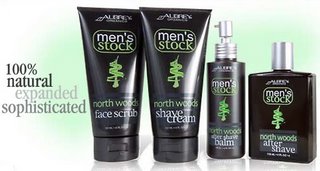
New Product: Aubrey Organics


We were more or less in the area yesterday, so Mrs THIT and I stopped by this delightful little treehugger store (I'm sure they'd have a preferable name for it, but you know what I'm talkin' 'bout, yo) called Arbour. This was my second visit, and Christine's first.

Whilst the Mrs was sifting through a number of different items that she found (and I quote) "neat", I made my way over to the men's grooming section. I came across the above (click on the picture) and had my attention drawn. All right, Aubrey (if that's your real name). What's so great about YOUR product??

A fair bit, as it turns out. I tried the shaving cream specifically. It was a bit of a leap of faith, because it's kind of pricy (about $11). I had a three-day growth on me, and figured that would be a decent test.

Here are some claims:

-100% Natural Ingredients
a) Organic avocado oil and wheat germ oil to help razor glide smoothly.
b) Witch hazel (what the hell is that? Research will be required...) to soothe irritation.
c) Camphor (???), menthol and organic eucalyptus to cool and invigorate.

'kay, so off I go.

The first bit of potential weirdness is that this stuff doesn't lather. I used to have lather-free shaving cream and it takes some getting used to, I find, so I don't particularly care but be warned.

Next is the smell. You'll spend most of your shave asking yourself "what the hell does this remind me of??" until it hits you: Vick's Vapour rub. Menthol, see.

And third is when you clean your razor between strokes. This is hard to describe. It's almost like this stuff creates a film that you scrape off. So rather than see individual hairs in your sink, you'll see small clumps in a clear gel. It looks worrisome because you wonder if you didn't slice off a layer of skin (but of course, you haven't). Anyone see Gary Oldman in "Hannibal"? Sort of like that.

But when it's all said and done...damn, I really liked this stuff and I plan on seeing what else Aubrey has to offer. It really was smooth and the menthol thing doesn't bother me. Plus it'll be great to use the next time I get a cold. :-)

The container is recyclable, the product is certified vegan and no animal testing went into its creation. The good far outweighed the not-so-good, so I'm a believer.

Wednesday, April 12, 2006

Planet Organic

Planet Organic

Never heard of these guys. The have locations out West, out East but don't seem to have much going on in between, unfortunately. Appreciate the effort here though...

PLANET ORGANIC MARKETS (a division of Planet Organic Health Corp (TSX-V, POH)), Canada’s leading natural and organic supermarket chain, has become a part of the growing number of businesses harnessing wind power. In an effort to ramp up its environmental efforts, the company has purchased wind power for all their computers.

Planet Organic Markets has signed an agreement to buy electricity from the Pembina Institute, a non-profit environmental organization dedicated to sustainable energy solutions. The bulk purchase for 24- Megawatt hours of wind energy is equivalent to 24 tonnes of CO2 emissions. This is equal to taking 20 average cars off the road for an entire year!

In addition to that, the "healthy recipes" link at the top left seems interesting. I'll have to give it a longer look the next time I'm trying to think of a meal to botch.

Wednesday, February 22, 2006

The Good and Bad about Organics


"Organic" is a term that sounds like something a treehugger should like, but I never really knew specifically why I'd be expected to. I'd heard that some of the so-called benefits aren't really all that significant. So like many issues related to being environmentally-conscious, I was unsure as to whether it was something I should investigate and pursue more, or whether I was spending more time and coin for very little upside. The article below helps answer the question somewhat:

The Good and Bad about Organics

February 22, 2006 — By Lisa Roberts, Orlando Sentinel
A Consumer Reports survey recently found that organic produce can cost as much as double the price of traditionally grown products. Is it worth the extra money to keep clear of pesticides? Not always, the magazine concludes, pointing to an analysis of USDA data by the Environmental Working Group of Washington, D.C.

Based on thousands of samples, the nonprofit research group came up with the "dirty dozen" -- vegetables and fruits that have high pesticide residuals, even after washing. They are apples, bell peppers, celery, cherries, imported grapes, nectarines, peaches, pears, potatoes, red raspberries, spinach and strawberries. Lowest in residual pesticides are asparagus, avocados, bananas, broccoli, cauliflower, sweet corn, kiwi, mangos, onions, papaya, pineapples and sweet peas.

Although proponents say organics are tastier, safer and more nutritious, "no clear scientific evidence [of that] exists," says Tejal Parekh, a registered dietitian at M.D. Anderson Cancer Center in Orlando. Organics might have no pesticide residue, but studies have yet to show that ingesting such residue causes health problems. However, there is little argument that organic farming, which shuns pesticides and synthetic fertilizers, does less harm to the environment than conventional methods.

If you can afford to buy organics in place of the dirty dozen, "certainly it would be beneficial to you," Parekh says. Other organic produce, though, might not justify its higher price. If you find the price too steep, there's no reason to cut down on fruits and vegetables. Just give everything a good scrubbing before preparing it.

However, "if you are eating a lot of meat, poultry and dairy foods, then you might want to make some of those foods organic, too, especially if you have children," Parekh says. "You won't get all the antibiotics and hormones given to those animals."

On its Web site, the Organic Trade Association (ota.com) says organic products cost more because the industry must meet stricter regulations in the growing, harvesting, transporting and storing of the products. That makes the process more labor- and management-intensive. Also, farming tends to be on a smaller scale.
Listening to: Bellyaching about the Canadian hockey team.